

In December 2017, a $10 season pass with 100 unlockable tiers turned Fortnite into a machine that kept players coming back night after night, and helped push Epic Games past $1 billion in a single quarter. The mechanic behind it, steady progress toward visible rewards, did not stay in gaming. Online casinos and sportsbooks now borrow the same reward systems to solve their hardest problem, keeping a player depositing and playing instead of drifting to the next site.
The Retention Problem in iGaming
iGaming loses most new players fast. Signing up a new player is expensive, and keeping one costs 3 to 7 times less than acquiring a replacement, yet retention runs low. Industry Day-30 retention often falls between 15% and 25%, meaning most new depositors are gone within a month. Every player who leaves takes the acquisition cost with them and returns nothing. Acquisition costs in regulated markets are high enough that a book which cannot hold players spends most of its marketing budget replacing the ones it lost. That imbalance pushes operators toward anything that makes a player stay, and reward systems are the most reliable tool available.
The Video Game Playbook
Game designers spent years turning rewards into retention. The battle pass is the sharpest example. A player earns points through daily and weekly challenges and climbs a track of 50 or 100 tiers, each one a small reward that keeps the next one barely out of reach. Two mechanics do the heavy lifting. Visible progress toward a goal
pulls a player back to finish what they started, and streaks add loss aversion, since breaking a run of consecutive days feels like giving something up. The reward’s cash value is secondary. Both mechanics work by making a player reluctant to stop. Fortnite refined the template across dozens of seasons, and free-to-play mobile games pushed it further with login rewards and limited-time events that reset the pull every day.
Building Rewards Into the Payment Flow
These mechanics live or die on execution, and execution runs through payments. A reward that credits a day after a deposit is easy to ignore. One that appears the instant a player funds an account changes what they do next. A modern set of gambling payment solutions can tie the reward logic to the transaction, letting an operator credit points, unlock a tier, or apply cashback at the moment of deposit, so the mechanic feels immediate. Without that link, a loyalty program is a record the player never sees. With it, the reward becomes part of paying.

Tiered Programs and Faster Payouts
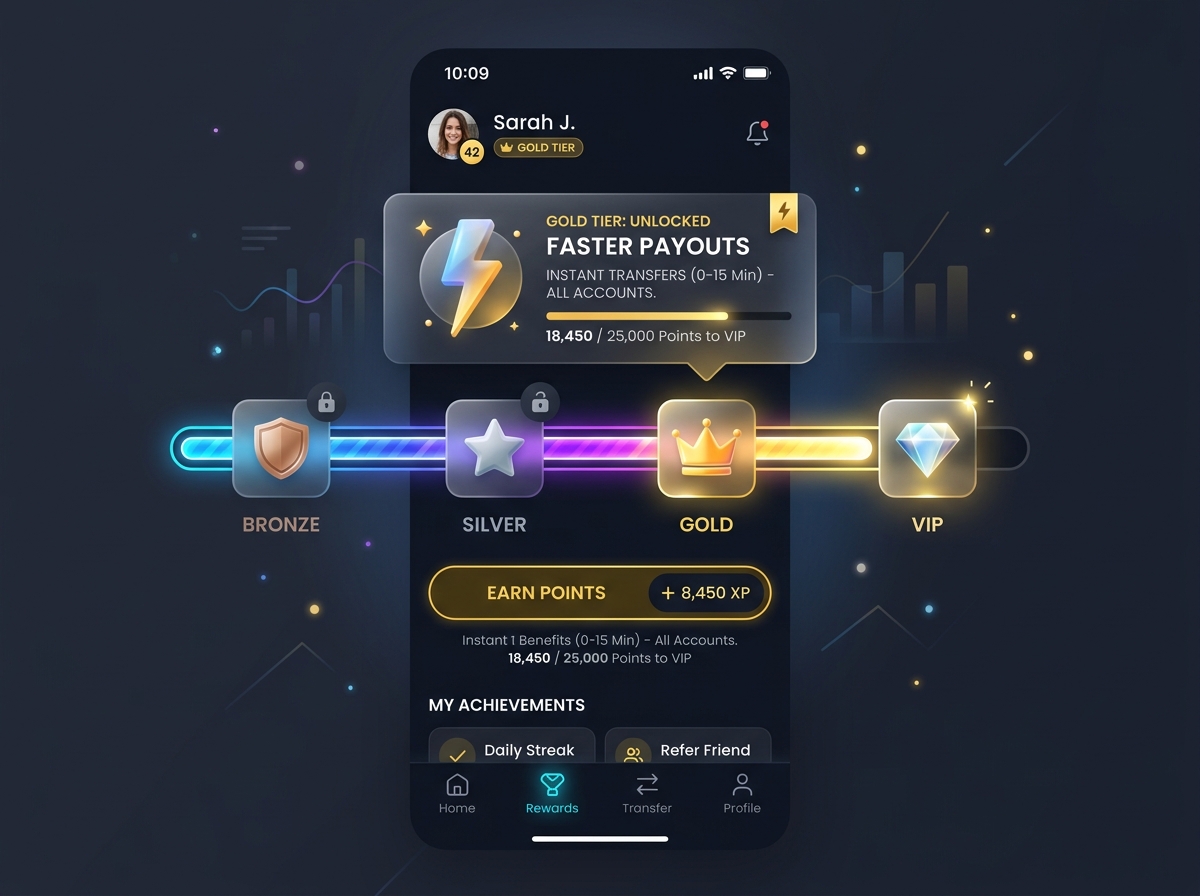
The VIP tier is the casino’s battle pass, the progression pass model borrowed from games. Players climb from Bronze to Silver to Gold by depositing and wagering, and each level unlocks better terms. A serious player values a faster withdrawal above any bonus. Mid-tier and high-value players get priority payouts, higher limits, and personalized offers, and the promise of quicker access to winnings is a direct payment benefit that keeps a player climbing. The tier system turns ordinary deposit and
withdrawal activity into visible progress toward something the player wants. The climb also gives a leaving player a reason to reconsider, since walking away means abandoning a status they spent months building.
Deposit Streaks and Daily Missions
Streaks and missions bring the daily pull into iGaming. A deposit streak rewards a player for funding an account on consecutive days, and the loss aversion that keeps a Fortnite player logging in keeps a bettor coming back to protect the run. Daily and weekly missions give a player a reason to return with a specific task, a set number of hands or a wagering target, each tied to a reward. These mechanics work because they replace a vague urge to play with a concrete goal and a deadline, and the payment system records the deposit or wager that completes each one.
Personalized Rewards and Player Data
A generic reward treats every player the same, and it underperforms for exactly that reason. The data a payment system already holds, how often a player deposits and when they tend to play, lets an operator shape rewards around the individual. A player who deposits every Friday gets a Friday mission. A high-roller gets a tier perk a casual player would never notice. Personalized rewards lift satisfaction and lifetime value well above what a one-size offer produces, because the reward matches what the player actually does. The same transaction records that power the payment system are the raw material for that personalization.
Related Posts


The Real-Time Difference
The timing of the reward decides how well it works. Operators that fire rewards in real time, the moment a deposit confirms or a mission completes, report Day-30 retention in the 30% to 40% range, against the 15% to 25% industry norm. The reward matters less than its timing. A player who sees points appear the second they pay learns that the site responds to them, and that immediate feedback is what game designers spent a decade tuning.
The Payment Layer’s Role
None of this works if the payment layer cannot keep up. Crediting a reward at the instant of deposit, tracking a player’s tier across every transaction, and paying a VIP faster than a standard user all run inside the payment system. An operator building game-style rewards needs a cashier that can read the transaction, apply the reward rule, and adjust payout speed by tier, in real time and without manual work. The reward mechanics are the front end. The payment infrastructure is what makes them fire on time. A cashier that lags turns a real-time reward into a delayed one, and a delayed reward is a broken promise the player remembers.
The Responsibility Line
Reward systems come with a duty of care. The same mechanics that keep a player active can feed the uncontrollable urge that defines problem play in a vulnerable one, and regulators watch loyalty programs closely for exactly that. A responsible program
rewards activity without encouraging a player to chase losses or deposit beyond their means, and it pairs the reward logic with the operator’s responsible-play controls. Retention built on healthy play lasts, while retention built on pressure invites both churn and enforcement.
The Engine of Repeat Deposits
Retention decides if an iGaming business grows or churns through its acquisition budget, and video-game reward systems are the most tested way to lift it. They only work when the reward lands the moment a player pays. Wired into the payment flow, a loyalty program stops being a scheme the player never notices and becomes a reason to stay, deposit after deposit. That is the only retention that compounds.