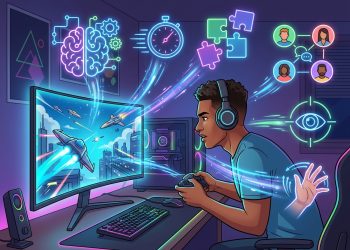

If you like gaming but have never really seen the potential in how it could be more than just a fun way to pass the time, think again.
Gaming in the modern world is so much more than a hobby. What was once viewed as a simple form of entertainment has grown into a global industry that influences technology, communication, education, and even careers. F
or some fortunate individuals, gaming has become a full-time profession through esports, content creation, and streaming.
However, you do not need to be a professional gamer to benefit from gaming. Even if you never enter a tournament or build a career around video games, the time you spend gaming could be helping you develop valuable skills that positively impact your daily life.
From communication and teamwork to problem-solving and creativity, gaming often provides benefits that many people never consider.
Although gaming has faced criticism over the years, there is no denying that it has evolved significantly.
Modern games are more interactive, social, and challenging than ever before. They require players to think critically, collaborate with others, make quick decisions, and adapt to constantly changing situations.
Let’s take a closer look at some of the biggest reasons why gaming is more than just a hobby.
Why Gaming Is More Than a Hobby
1. Your Social Skills
Believe it or not, contemporary gaming is a social activity. Even if you don’t consider shouting instructions to your friends while trying to survive a match on Call of Duty as “improving your social skills,” you are still developing important communication abilities.
Many multiplayer games require constant interaction between players. Team members must share information, coordinate their actions, communicate strategies, and react quickly to changing situations. This type of communication often takes place under pressure, forcing players to think clearly and express themselves effectively.
In addition, most team-based games require some form of leadership and cooperation. Sometimes you are the person giving instructions, while at other times you are the one following directions from someone else. Learning when to lead and when to follow is a valuable skill that extends far beyond gaming.
Gaming can also expose players to people from different cultures, backgrounds, and countries. Through online gaming communities, players often learn how to work with individuals they would never normally meet. These interactions encourage cooperation, patience, and understanding.
Even if you do not realise it, playing video games is likely improving how you work within a team, how efficiently you communicate with others, and how effectively you make decisions that benefit a larger group. These are skills that can prove useful at school, in the workplace, and in personal relationships.
2. Your Perception Skills
Many video games require players to process large amounts of information in a very short period of time. As a result, gaming can help strengthen perception and awareness.
Simulation games such as madalin stunt cars 3, a free driving game, provide excellent examples of how gaming can challenge perception skills. Driving games often require players to monitor speed, avoid obstacles, assess potential hazards, and react quickly to changing conditions.
While a driving game is obviously different from operating a real vehicle, these games encourage players to remain alert and aware of their surroundings. Missing a crucial detail for even a few seconds can lead to failure.
The same principle applies to many other genres. Action games require players to identify threats quickly. Sports games demand awareness of multiple moving elements at once. Strategy games require monitoring resources, opponents, and objectives simultaneously.
Whether you work in an environment that requires strong observational skills or simply want to improve your ability to pay attention to detail, gaming can help strengthen your perception and concentration. The more you practice analysing situations quickly, the easier it becomes to apply those skills in real-world scenarios.
3. Your Ability to Problem Solve
Problem-solving is at the heart of gaming. In many ways, every game is built around overcoming obstacles and finding solutions.
Whether you are completing a quest, escaping danger, defeating a difficult opponent, solving a puzzle, managing a sports team, or planning a strategy, gaming is fundamentally about solving problems and solving them efficiently.
Many games present players with challenges that become increasingly difficult as they progress. To succeed, players must analyse situations, test different approaches, learn from mistakes, and adapt their strategies accordingly.
What makes gaming particularly effective for developing problem-solving skills is the immediate feedback it provides. If one solution fails, players quickly learn why and are encouraged to find a better approach.
Over time, this process trains the brain to become more flexible and adaptable. When faced with challenges at work, in education, or in everyday life, gamers often find themselves approaching problems with a solution-focused mindset simply because they have practiced it repeatedly through gaming.
Your ability to troubleshoot issues, think critically, and adapt under pressure may be developing every time you pick up a controller.
4. Gaming Can Improve Strategic Thinking
Strategic thinking is another valuable skill that many games help develop.
Strategy games, role-playing games, management simulators, and multiplayer competitive games often require players to think several steps ahead.
Success is rarely determined by quick reactions alone. Instead, players must plan, anticipate outcomes, manage resources, and prepare for various possibilities.
For example, many strategy games require players to decide how to allocate limited resources while anticipating the actions of opponents. Every decision has consequences, and poor planning can lead to failure.
Even games that appear simple on the surface often reward long-term thinking. Players learn to evaluate risks, identify opportunities, and develop plans that maximise their chances of success.
These strategic thinking skills can transfer into real-life situations where careful planning and decision-making are required.
5. Gaming Can Improve Hand-Eye Coordination
One frequently overlooked benefit of gaming is the improvement of hand-eye coordination.
Many games require players to process visual information and respond to it immediately. Whether aiming at a target, driving through obstacles, performing complex movements, or executing precise commands, players must coordinate what they see with how they respond physically.
Fast-paced games can help improve reaction times and fine motor skills because players are constantly making small adjustments and responding to visual cues.
While gaming should never replace real-world practice in professional activities, it can certainly help strengthen coordination and reflexes in an enjoyable way.
Related Posts


6. Gaming Helps Develop Resilience
Anyone who has spent time gaming knows one simple truth: failure is part of the experience.
Players lose matches. They fail missions. They get defeated by stronger opponents. They make mistakes. They encounter challenges they cannot overcome on the first attempt.
Yet gamers rarely quit after one failure.
Instead, they try again. They learn from their mistakes. They adjust their strategy and continue moving forward.
This process builds resilience. It teaches patience, persistence, and determination. It encourages players to view setbacks as opportunities to improve rather than reasons to give up.
These lessons extend well beyond gaming. The ability to remain calm and keep trying after failure is a valuable quality in education, careers, relationships, and personal growth.
7. Gaming Can Encourage Creativity
Gaming isn’t always about competition. Many games encourage players to build, design, create, and experiment.
Sandbox games, world-building games, simulation games, and creative modes allow players to express themselves in unique ways. Players may design structures, create entire cities, customise characters, develop stories, or construct elaborate environments.
Creativity often thrives when people are given the freedom to experiment without fear of failure. Games provide exactly that environment.
Many players discover new ways of thinking, develop creative problem-solving abilities, and learn to approach challenges from different perspectives through gaming.
This creative mindset can be useful in many areas of life, including education, business, art, and personal projects.
8. Gaming Has Created Career Opportunities
One of the strongest examples of gaming being more than a hobby is the number of career opportunities it has created.
Today, gaming supports entire industries and countless professions. Professional esports competitors compete for large prize pools and sponsorship deals.
Streamers build audiences through platforms that allow them to share their gaming experiences. Content creators produce gaming videos, tutorials, reviews, and entertainment content for millions of viewers.
Beyond the visible side of gaming, there are also opportunities in game development, game testing, game design, graphic design, animation, esports coaching, event management, marketing, community management, and gaming journalism.
While not everyone will pursue a career in gaming, the growth of the industry demonstrates that gaming has evolved far beyond being a simple pastime.
9. Gaming Builds Communities
Gaming has the unique ability to connect people from around the world.
Online communities allow players to collaborate, compete, share experiences, and build friendships regardless of geographical location. Many gamers regularly interact with people they may never meet in person, yet these friendships can become meaningful and long-lasting.
Gaming communities often provide support, encouragement, and a sense of belonging. For some individuals, gaming serves as a valuable social outlet that helps them connect with like-minded people who share common interests.
These connections remind us that gaming is often about people just as much as it is about the games themselves.
10. Gaming Can Be a Healthy Way to Reduce Stress
Life can be stressful. Between work, school, family responsibilities, and everyday challenges, most people need a way to relax and recharge.
For many individuals, gaming provides that escape.
After a long day, spending time exploring a virtual world, completing objectives, or simply playing with friends can be a highly enjoyable way to unwind. Gaming offers a temporary break from everyday pressures and allows players to focus on something fun and engaging.
Like any activity, moderation is important. However, when balanced with other responsibilities, gaming can serve as a healthy recreational activity that promotes relaxation and enjoyment.
In conclusion, video games can improve areas of your life that have nothing to do with gaming itself. What may seem like simple entertainment on the surface often involves communication, teamwork, critical thinking, creativity, strategic planning, resilience, and problem-solving. Everything is connected, and if you spend hours enjoying video games, there is a good chance you are developing skills that extend far beyond the screen.
Gaming is no longer just a hobby. For some, it is a career. For others, it is a social activity, a creative outlet, a learning experience, or a way to relax. Whatever your reason for playing, one thing is clear: gaming has become much more than simply pressing buttons and passing the time.